AI Content Brief Template: Streamline Your Creative Workflow
Struggling to keep your AI content creation consistent and on-brand? An AI content brief template can be your secret weapon for efficient, high-quality output.
9 min read · September 4, 2026
Why Standard AI Content Creation Falls Short
Relying solely on generic prompts for AI content generation often leads to disappointing results. While AI tools are powerful, they lack the inherent understanding of your specific brand, audience, and strategic goals that a human creator possesses. Without clear, structured guidance, the output tends to be bland, repetitive, and off-brand. You might ask an AI writer for a blog post about a new product feature, and while it will generate text, it may miss the nuance of your brand's voice, fail to highlight the most compelling benefits for your target audience, or even introduce factual inaccuracies. This leads to a frustrating cycle of prompt iteration and extensive editing, consuming valuable time and resources. You might find yourself needing an AI writing assistant to help you refine the AI's output, which defeats the purpose of efficiency.
The core problem is not the AI itself, but the absence of a clear framework that translates your strategic intent into actionable instructions for the AI. Without this bridge, the AI operates in a vacuum, producing content that is technically correct but strategically deficient. This can manifest as:
- Inconsistency: Tone of voice, terminology, and messaging can vary wildly from one piece of content to the next.
- Generic Output: Content lacks unique insights or a distinct brand personality, making it indistinguishable from competitors.
- Brand Drift: AI-generated content may inadvertently stray from established brand guidelines, diluting brand identity.
- Strategic Misalignment: Content might not effectively address the intended audience's needs or contribute to overarching marketing objectives.
- Excessive Revisions: Significant human editing is required to correct errors, refine tone, and ensure strategic alignment, negating the time-saving benefits of AI.
What is an AI Content Brief Template?
An AI content brief template is a structured document designed to provide AI tools with the specific context and constraints needed to generate high-quality, on-brand, and strategically aligned content. Think of it as a detailed blueprint for your AI collaborators. Instead of just giving a single, broad prompt, you provide a comprehensive set of instructions that guide the AI's creative process from start to finish.
This template serves as a central repository of essential information that informs the AI about who the content is for, what it should convey, why it's being created, and how it should be presented. By standardizing this information, you ensure that every piece of AI-generated content, regardless of who is prompting the AI or which specific tool is used within a suite, adheres to a consistent set of criteria. This structured approach moves AI content creation from a purely generative task to a strategically directed one.
Key Components of an Effective AI Content Brief
A robust AI content brief template should cover several critical areas. Including these elements ensures you're providing the AI with all the necessary context to perform optimally.
- Content Objective: What is the primary goal of this content? Is it to educate, persuade, entertain, drive traffic, generate leads, or build brand awareness? Be specific. For example, instead of "drive traffic," aim for "increase organic traffic to the product page by 15%."
- Target Audience: Who are you trying to reach? Define your ideal reader with as much detail as possible. Include demographics (age, location, job title), psychographics (interests, values, pain points), and their current stage in the buyer's journey.
- Keywords: List primary and secondary keywords that should be naturally incorporated into the content. Specify if you're targeting informational, navigational, or transactional search intent.
- Tone of Voice: Describe your brand's personality. Is it formal, informal, authoritative, friendly, witty, empathetic, or technical? Provide examples if possible. This is crucial for maintaining brand consistency.
- Key Messages/Talking Points: What are the essential points the content must communicate? These are the core takeaways for the reader. Prioritize them in order of importance.
- Call to Action (CTA): What do you want the reader to do after consuming the content? Examples include "Sign up for a free trial," "Download the e-book," "Learn more on our website," or "Contact sales."
- Negative Constraints/Things to Avoid: What should the AI not do or include? This is as important as specifying what to include. Examples: "Do not use jargon," "Avoid mentioning competitors by name," "Do not make unsubstantiated claims," "Avoid overly technical language."
- Format and Length: Specify the desired format (e.g., blog post, social media update, email newsletter, product description) and any approximate word count or length requirements.
- Brand Guidelines (Optional but Recommended): You might include links to or summaries of your brand's style guide, preferred terminology, or any specific do's and don'ts that aren't covered elsewhere.
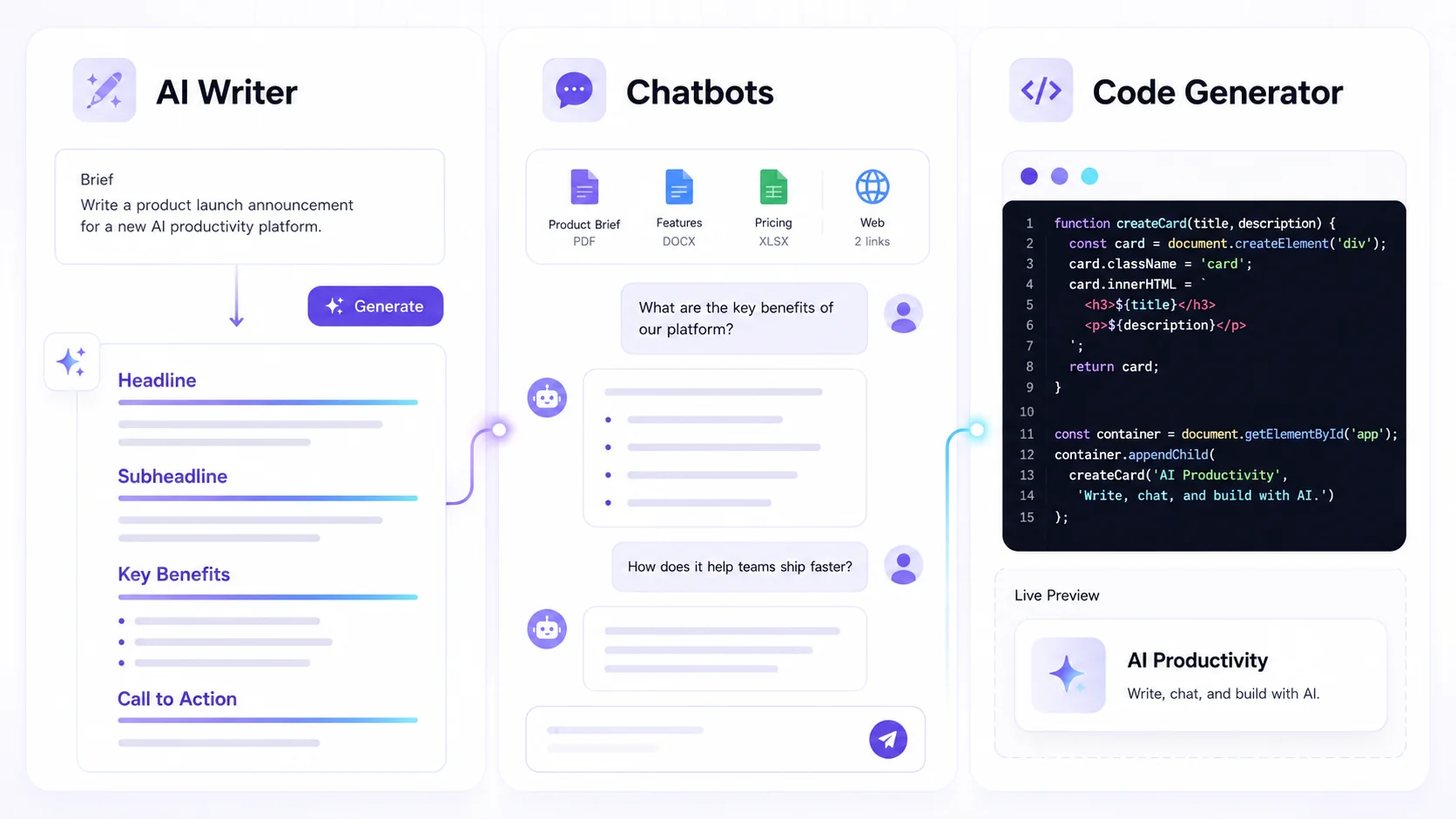
When using tools like the AI Writer or the Article Wizard within an integrated suite, you can feed this detailed brief directly into the AI's prompt. This structured input significantly increases the likelihood of generating content that meets your exact specifications from the first pass.
How to Use Your AI Content Brief Template
Creating the template is only the first step; effectively using it is where the magic happens. Here’s a practical, step-by-step approach:
- Develop Your Template: Start by creating a document (e.g., a Google Doc, a Word file, or a dedicated template within your project management tool) that outlines all the key components discussed above. Leave space for specific details for each new piece of content.
- Define the Project: Before filling out the template for a new piece of content, clearly define its purpose, target audience, and desired outcome. What problem does this content solve for the reader?
- Fill in the Brief: For each new content request, meticulously fill out every section of your template. The more detail you provide, the better the AI will understand your requirements.
- Objective: "Increase sign-ups for our AI writing webinar."
- Audience: "Small business owners (1-10 employees) struggling with consistent social media marketing, aged 30-55, interested in efficiency and growth hacks."
- Keywords: "AI social media marketing," "content creation tools," "small business marketing."
- Tone: "Informative, encouraging, practical, and slightly informal."
- Key Messages: "AI can simplify social media creation. Our webinar will show you how. Learn actionable tips you can implement immediately."
- CTA: "Register for the webinar now."
- Avoid: "Don't use overly technical AI terms. Avoid making guarantees about ROI."
- Format/Length: "Blog post, approximately 800 words."
- Translate to AI Prompt: Take the detailed information from your brief and construct your prompt for the AI tool. You might copy and paste sections of the brief directly or synthesize them into a comprehensive prompt. For example: "Write an 800-word blog post for small business owners (aged 30-55) who struggle with social media marketing. The tone should be informative, encouraging, and practical. The post should explain how AI can simplify social media content creation and highlight that our upcoming webinar offers actionable tips. Include keywords like 'AI social media marketing' and 'content creation tools.' The call to action is to register for the webinar. Avoid technical jargon and unsubstantiated claims."
- Generate and Review: Submit your prompt to your AI content generation tool. Review the output critically. Does it align with the brief?
- Refine and Edit: Use the AI's output as a strong first draft. Make necessary edits to ensure perfect alignment with your brief, add any human-specific insights, and polish the language. The goal is to minimize editing, not eliminate it entirely.
- Iterate and Improve: As you use your template and AI tools, you'll learn what types of prompts and brief details yield the best results. Refine your template and your prompting strategy over time.
Benefits of Using an AI Content Brief Template
Implementing an AI content brief template into your workflow offers significant advantages for content creators, marketers, and agencies:
- Improved Consistency: By standardizing instructions, you ensure that all AI-generated content, whether it's blog posts, social media updates, or ad copy, maintains a consistent tone of voice, messaging, and adherence to brand guidelines. This builds a more cohesive and recognizable brand identity.
- Reduced Revisions and Editing Time: A well-defined brief minimizes the chances of the AI producing off-topic, off-brand, or factually incorrect content. This directly translates to less time spent on manual editing and revisions, freeing up your team for more strategic tasks.
- Better Brand Alignment: The brief acts as a constant reference point, ensuring the AI understands and replicates your brand's unique personality, values, and communication style. This prevents brand drift and reinforces your identity across all content.
- Enhanced Strategic Focus: By forcing you to articulate the objective, target audience, and key messages upfront, the brief ensures that every piece of content is strategically sound and contributes to your broader marketing goals. Content becomes a tool, not just words.
- Increased Efficiency and Productivity: A structured process streamlines the content creation workflow. Less time is spent on prompt engineering guesswork and more time is spent on refining high-quality drafts, leading to a significant boost in overall productivity.
- Scalability: For agencies or teams managing multiple clients or projects, a standardized brief template makes it easier to delegate content creation tasks to AI while ensuring consistent quality and brand adherence across all accounts.
Integrating AI Content Briefs into Your Workflow
Making AI content briefs a standard part of your process requires a commitment to structure and a recognition of their value. Here’s how to embed them effectively:
- Establish a Standard Operating Procedure: Treat the AI content brief template as a mandatory step for any AI-assisted content creation. Integrate it into your project management system or content calendar.
- Train Your Team: Ensure everyone involved in content creation understands how to use the template and why it's important. Provide examples and offer guidance on how to fill it out effectively.
- Leverage an Integrated AI Suite: Tools like Textalky, an all-in-one AI studio, are designed to streamline creative workflows. Instead of juggling multiple subscriptions for different AI tasks, an integrated platform allows you to manage your content brief and generate various assets from a single interface. This synergy enhances the effectiveness of your briefs, as you can easily transition from writing to image generation or voiceover creation, all informed by the same strategic context.
- Iterate and Refine: Regularly review the effectiveness of your briefs and the AI output. What worked well? What could be improved? Use feedback to update your template and prompting strategies.
- Consider Your Tooling: When evaluating AI content tools, consider how well they support structured input. Platforms that allow for detailed prompts, custom templates, or easy integration of brief elements will be more effective. Exploring different AI plans can help you find the right fit for your needs and budget.
Frequently Asked Questions
What is the primary purpose of an AI content brief template?
The primary purpose of an AI content brief template is to provide AI tools with specific, structured guidance on objectives, audience, tone, key messages, and constraints. This ensures that AI-generated content is not only accurate but also aligned with brand strategy and marketing goals, moving beyond generic output.
How does an AI content brief template improve brand consistency?
By detailing specific requirements for tone of voice, preferred terminology, and brand personality, the template acts as a set of instructions that the AI can follow consistently. This reduces the likelihood of the AI producing content that deviates from your established brand identity, ensuring a cohesive brand message across all generated materials.
Can an AI content brief template help reduce editing time for AI-generated content?
Yes, absolutely. A comprehensive brief minimizes the need for extensive revisions by providing the AI with clear parameters upfront. When the AI understands the target audience, objectives, and specific messaging required, it generates content that is much closer to the desired final output, significantly reducing the time and effort needed for human editing.
Streamline Your Creative Process with Textalky
Creating high-quality, on-brand content with AI doesn't have to be a shot in the dark. By implementing a structured AI content brief template, you provide the essential direction AI tools need to deliver exceptional results consistently. This approach saves time, reduces revisions, and ensures your content effectively meets strategic objectives.
If you're looking to elevate your AI content creation and streamline your entire creative workflow, it's worth exploring solutions that integrate these powerful capabilities. For a limited time, you can get lifetime access to a comprehensive suite of AI tools with the AI Lifetime Pro deal for a single one-time payment of $79. This offer provides a cost-effective way to access a complete AI creative studio designed to enhance your productivity and content quality.
Ready to transform your AI content creation process?
Sign up for Textalky today and start building your content briefs.
Ready to try it yourself?
Create a free Textalky account - no credit card required - and put this into practice.
Start creating for free