How to Make AI Writing Undetectable: Strategies for Authentic Content
AI writing tools are powerful, but their output can sometimes be flagged by detectors. Discover how to refine your AI-generated content to sound more natural and avoid detection.
11 min read · September 4, 2026
AI writing is becoming incredibly sophisticated, but as its capabilities grow, so does the concern that it can be too easily identified. Content creators, bloggers, marketers, and students are increasingly finding their AI-generated work flagged by detection software. This raises questions about originality, academic integrity, and whether the content truly resonates with an audience that often prefers a human touch. When your work is rejected or penalized, or simply fails to connect, it’s a clear sign that simply generating text isn't enough. The challenge isn't just about producing content; it's about producing content that feels authentic, valuable, and undeniably human.
Understanding AI Writing Detectors
AI writing detectors are sophisticated tools designed to identify text that has been generated by artificial intelligence. They work by analyzing various characteristics of written language, looking for patterns that are common in AI output but less so in human writing. These tools often focus on metrics like:
- Perplexity: This measures how "surprising" or unpredictable a piece of text is. Human writing tends to have more variation in perplexity, with sentences that might be complex or simple, while AI often produces text with a more consistent, predictable flow.
- Burstiness: This refers to the variation in sentence length and structure. Human writing often features a mix of short, punchy sentences and longer, more elaborate ones. AI-generated text can sometimes exhibit a more uniform sentence structure, lacking this natural variation.
- Vocabulary and Phrasing: Detectors can be trained to recognize common AI phrasing, overly formal language, or a lack of colloquialisms and idiomatic expressions that are natural to human communication.
- Statistical Anomalies: They look for statistical patterns that deviate from typical human writing, such as the distribution of words or the frequency of certain grammatical structures.
The prevalence of these detectors is growing because AI-generated content, while useful, can sometimes lack the nuance, creativity, and distinct voice that human authors bring. This is particularly relevant in fields like academia, journalism, and creative writing, where originality and a personal perspective are paramount. Understanding the underlying mechanisms of these detectors is the first step in learning how to produce content that stands out. For a deeper dive into the broader landscape of AI in content creation, you might find it helpful to explore the differences between AI vs traditional content creation.
The Limitations of AI Detectors
While AI writing detectors are becoming more advanced, it's crucial to remember they are not infallible. Like any technology, they have limitations and can sometimes produce inaccurate results. One of the most significant issues is the potential for false positives. This means that content written by a human, or even AI-assisted content that has been heavily edited, might be incorrectly flagged as AI-generated. This can be particularly frustrating for creators who have invested time and effort into crafting their work.
The reasons for these inaccuracies are varied. Detectors are trained on specific datasets, and if your writing style doesn't conform to the patterns they expect, it can be misidentified. Furthermore, AI models themselves are constantly evolving. As AI becomes more sophisticated in mimicking human writing, the detection methods must adapt, creating a continuous arms race. This evolving landscape means that what is detectable today might not be tomorrow, and vice versa.
This is where human editing becomes not just beneficial, but essential. Relying solely on an AI to generate text and then submitting it without review is a risky strategy. The true value lies in using AI as a powerful assistant, a co-pilot that handles the heavy lifting of drafting, while a human editor provides the critical oversight, creativity, and nuanced adjustments that make content truly shine. By understanding the limitations of detection tools, creators can focus on refining their output to ensure it passes not only automated checks but also the scrutiny of human readers.
Strategies to Make AI Writing Undetectable
The most effective way to ensure your AI-generated content is perceived as authentic is through careful, human-centric editing. Think of the AI as a highly efficient first drafter and yourself as the skilled editor who polishes it into a masterpiece. Here are actionable strategies to transform AI-generated text into something that feels distinctly human:
- Vary Sentence Structure and Length: AI often defaults to a consistent sentence structure. Actively break this pattern. Combine short, impactful sentences with longer, more descriptive ones. Use introductory clauses, subordinate clauses, and varied sentence beginnings. For instance, instead of a series of simple sentences, try: "The market was volatile. Investors, however, remained cautiously optimistic, anticipating a rebound."
- Inject Personal Anecdotes and Experiences: AI doesn't have personal experiences. Weave in your own stories, observations, or specific examples. Even if the core idea comes from AI, grounding it in a personal narrative makes it unique and relatable. For example, if AI writes about the benefits of a product, you could add: "I remember struggling with that exact problem before I found a solution. It felt like a constant uphill battle until..."
- Use Idioms, Slang, and Colloquialisms Appropriately: Human conversation is rich with informal language. Sprinkle in relevant idioms, common phrases, or even mild slang where appropriate for your audience and tone. AI often avoids these for fear of being too informal, so their inclusion can signal human authorship. For instance, instead of "The project encountered significant difficulties," you might say, "The project hit a few snags along the way."
- Introduce Specific Vocabulary and Nuance: AI can sometimes use generic terms. Replace them with more precise or evocative vocabulary. Consider the subtle differences in meaning between synonyms. For example, instead of "the company made money," you could use "the company achieved profitability" or "the company saw a surge in revenue," depending on the exact context.
- Add Personal Opinions and Subjective Statements: AI is designed to be objective. Inject your own perspectives, opinions, and even a touch of personality. Use phrases like "In my experience," "I believe," "It seems to me," or "What's interesting is..." This shifts the tone from purely informative to conversational and opinionated.
- Ask Rhetorical Questions: Engaging the reader with questions that don't necessarily require an immediate answer can mimic human conversational patterns. "But what does this really mean for the average user?" or "Isn't it fascinating how technology evolves?"
- Incorporate Contractions: Unless you are writing for a very formal academic context, using contractions like "it's," "don't," and "you're" makes text sound more natural and conversational, much like human speech.
- Embrace Imperfection (Slightly): Sometimes, human writing has slight imperfections that AI avoids, like a slightly awkward phrase that is nonetheless clear, or a sentence that begins with "And" or "But" for emphasis. Judiciously adding these minor deviations can help. For a deeper understanding of how to refine AI output, consider exploring resources on using an AI writing assistant.
By consciously applying these editing techniques, you transform AI-generated text from something that sounds like a machine wrote it into content that has your unique voice and perspective.
Leveraging AI Tools for Human-Like Text
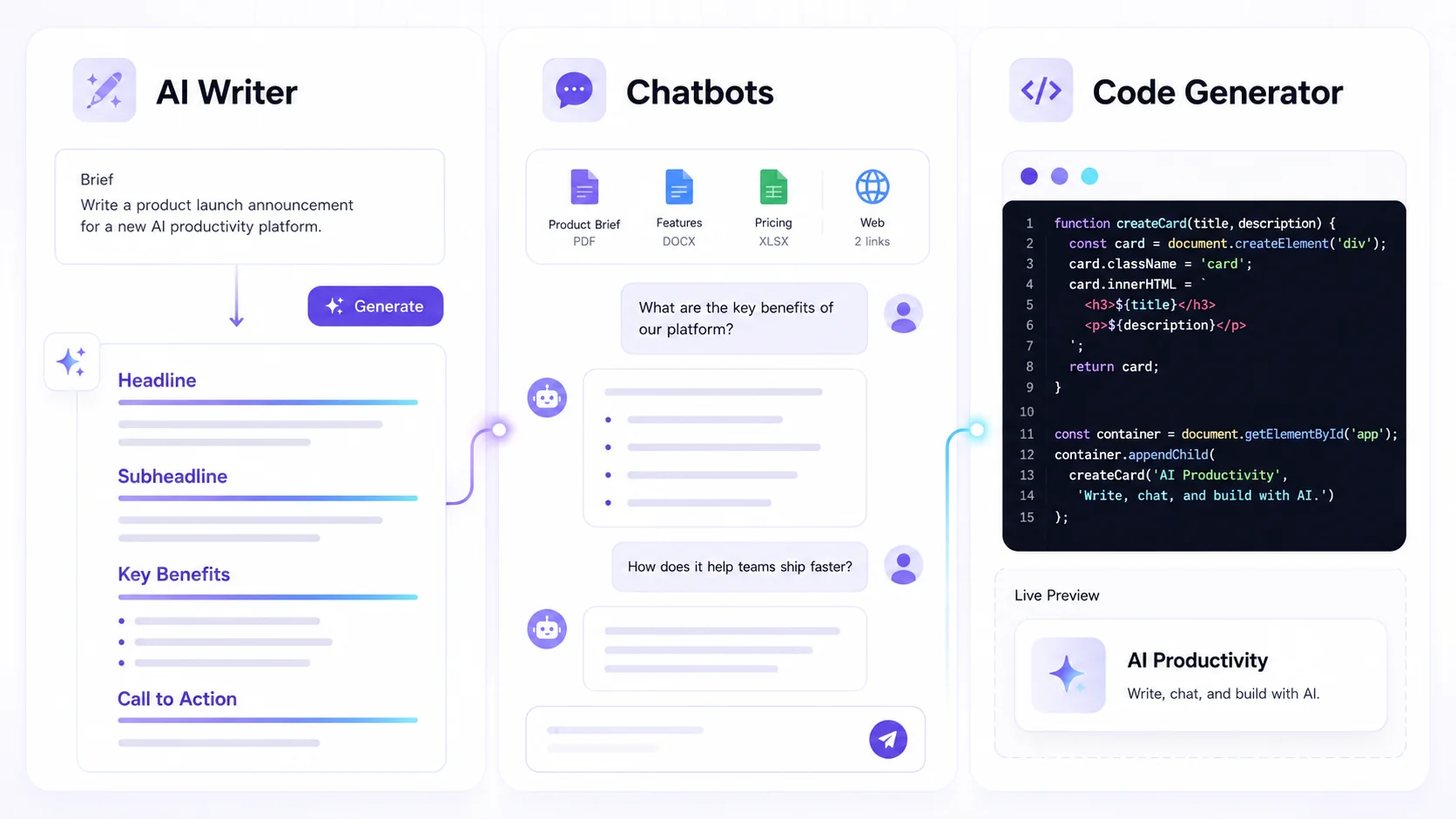
While the focus is on human editing, the right AI tools can actually help you enhance human-like qualities in your content. Textalky, as an all-in-one AI creative studio, offers a suite of features designed to support this goal.
The AI Writer and Smart Editor are your primary tools for initial generation and subsequent refinement. Instead of simply prompting for a block of text, you can use the AI Writer to generate drafts, outlines, or specific sections, and then immediately move to the Smart Editor. Here, you can actively rewrite sentences, adjust tone, expand on ideas, and ensure the language flows naturally. The Smart Editor helps you implement the human-centric editing strategies discussed earlier by providing tools to rephrase, summarize, or elaborate on text segments.
Custom Templates offer another powerful way to inject personality. You can train Textalky to adhere to a specific writing style, tone, or even vocabulary set. By creating and using your own custom templates, you guide the AI to produce output that more closely matches your established voice, making it inherently more human-like and consistent across all your generated content.
Beyond text, Textalky's AI voice tools can be invaluable for ensuring a consistent human tone. If you're creating video scripts or podcast content, using AI voiceovers can help maintain a unified style and delivery across different pieces of content. This consistency contributes to a more polished and professional presentation, reinforcing the perceived authenticity of your work. For a comprehensive overview of these capabilities, explore the AI Voice and Sound features.
Ultimately, using Textalky effectively means seeing it as a collaborative partner. You guide the AI, refine its output, and ensure the final product reflects your unique creative vision. For those looking to access a wide range of these tools without ongoing subscription fees, Textalky offers a compelling option. Comparing Textalky's plans reveals a variety of options, but their featured AI Lifetime Pro deal provides access to virtually all features for a single, one-time payment. This can be a particularly attractive way to acquire a comprehensive suite of creative AI tools.
The Importance of Human Oversight
It's a message worth repeating: AI is a tool, not a replacement for human creativity. While AI can generate text, images, and even code at incredible speeds, it lacks the lived experiences, emotional intelligence, and critical thinking that define human authorship.
Human oversight is where true value is added. It's the human editor who understands the subtle nuances of tone, the cultural context of an idiom, the emotional impact of a particular word choice, or the strategic purpose behind a specific piece of content. AI can mimic these elements, but it cannot truly understand them.
Your personal experiences, your unique perspective, your sense of humor, your empathy - these are the qualities that resonate with readers on a deeper level. They are what build trust, foster connection, and make content memorable. Relying solely on AI risks producing content that is technically correct but emotionally hollow, lacking the spark of genuine human insight.
Therefore, the most effective approach to AI content creation is a symbiotic one. Use AI to overcome writer's block, to speed up research, to draft initial content, or to explore different phrasing. But always, always bring your own critical thinking, creativity, and human touch to the final product. This ensures your content is not just undetectable but also genuinely valuable and engaging.
Ethical Considerations and Best Practices
As AI writing tools become more powerful and accessible, it's essential to consider the ethical implications of their use. The primary concern revolves around authenticity and transparency.
- Academic Integrity: In academic settings, submitting AI-generated work as your own without proper attribution is a form of plagiarism. Educational institutions are rapidly developing policies around AI use, and it's crucial for students to understand and adhere to these guidelines.
- Misinformation and Deception: AI can be used to generate convincing fake news or misleading content at scale. Creators have a responsibility to ensure the information they publish is accurate and not intended to deceive.
- Transparency: While the goal of this article is to make AI writing undetectable for reasons of authenticity and avoiding penalties, there are many contexts where transparency is the more ethical choice. For instance, in customer service chatbots or certain informational content, disclosing that AI is being used can build trust. The decision of when and how to be transparent depends heavily on the audience, purpose, and platform.
- Copyright and Ownership: The legal landscape around AI-generated content and copyright is still evolving. It's important to be aware of the terms of service for AI tools and understand who owns the content produced.
Best practices for ethical AI use include:
- Always review and edit: Never submit raw AI output without thorough human review for accuracy, tone, and originality.
- Attribute when necessary: If your institution or platform requires it, disclose AI assistance.
- Focus on value: Use AI to enhance your own creativity and produce higher-quality, more valuable content, rather than simply to churn out volume.
- Stay informed: Keep up with evolving ethical guidelines and technological advancements in AI.
By approaching AI tools with a mindful and ethical perspective, creators can harness their power responsibly, ensuring their content is both effective and reputable.
Frequently Asked Questions
How do AI writing detectors actually work?
AI writing detectors work by analyzing text for patterns characteristic of artificial intelligence. They look at metrics like perplexity (how predictable the text is), burstiness (variation in sentence length and structure), vocabulary choice, and common AI phrasing. They compare the analyzed text against a database of known AI-generated content to determine the likelihood of it being AI-authored.
Can I truly make AI writing undetectable?
While it's challenging to guarantee 100% undetectability against all future detection methods, you can significantly reduce the chances of your AI-generated content being flagged. This is achieved through thorough human editing, focusing on varying sentence structure, adding personal anecdotes, using natural language, and injecting your unique voice. The goal is to make the text indistinguishable from human writing by incorporating the nuances that AI often misses.
What are the ethical concerns when using AI writing tools?
Ethical concerns primarily revolve around authenticity, transparency, and potential misuse. Submitting AI-generated work as purely your own without disclosure can be considered plagiarism, especially in academic or professional contexts. There's also the risk of AI being used to spread misinformation or to deceive audiences. Responsible use involves thorough human review, understanding when transparency is appropriate, and ensuring the content is accurate and adds genuine value.
Conclusion
Navigating the world of AI writing detection is less about finding a magic bullet to make content invisible and more about embracing a collaborative approach. The most authentic and effective content comes from a partnership between powerful AI tools and human creativity. By understanding how detectors work, recognizing their limitations, and applying deliberate editing strategies, you can ensure your AI-assisted writing not only bypasses detection but also genuinely connects with your audience.
If you're looking for a comprehensive suite of tools to help you craft human-like content, from writing and editing to voiceovers and beyond, it's worth exploring Textalky. They offer an all-in-one creative studio designed to streamline your workflow. For a particularly compelling opportunity to access a vast array of features for a single, one-time investment, consider their featured AI Lifetime Pro deal. This offer provides lifetime access to many of the studio's capabilities for a one-time $79 payment, allowing you to refine your AI writing and enhance your creative output without ongoing subscription costs. Explore the AI Lifetime Pro deal to see if it aligns with your content creation needs.
Ready to try it yourself?
Create a free Textalky account - no credit card required - and put this into practice.
Start creating for free