AI Voice Cloning Software: Replicate Any Voice Accurately
Unlock the power of AI voice cloning to replicate any voice with stunning accuracy. This guide explores the technology, its applications, and how to choose the right software.
7 min read · September 4, 2026
The need for unique, consistent, and cost-effective voiceovers for a wide range of content is a constant challenge for creators, marketers, and producers. Relying on human voice actors can be expensive, time-consuming, and sometimes difficult to scale, especially when precise consistency across many projects is required. This is where AI voice cloning software emerges as a powerful solution.
What is AI Voice Cloning Software?
AI voice cloning software refers to technology that can replicate a specific human voice using artificial intelligence. Unlike standard text-to-speech (TTS) systems, which use a library of pre-recorded generic voices, voice cloning aims to create a digital replica of an individual's unique vocal characteristics. This includes pitch, tone, accent, and cadence, allowing for the generation of speech that sounds remarkably like the original speaker.
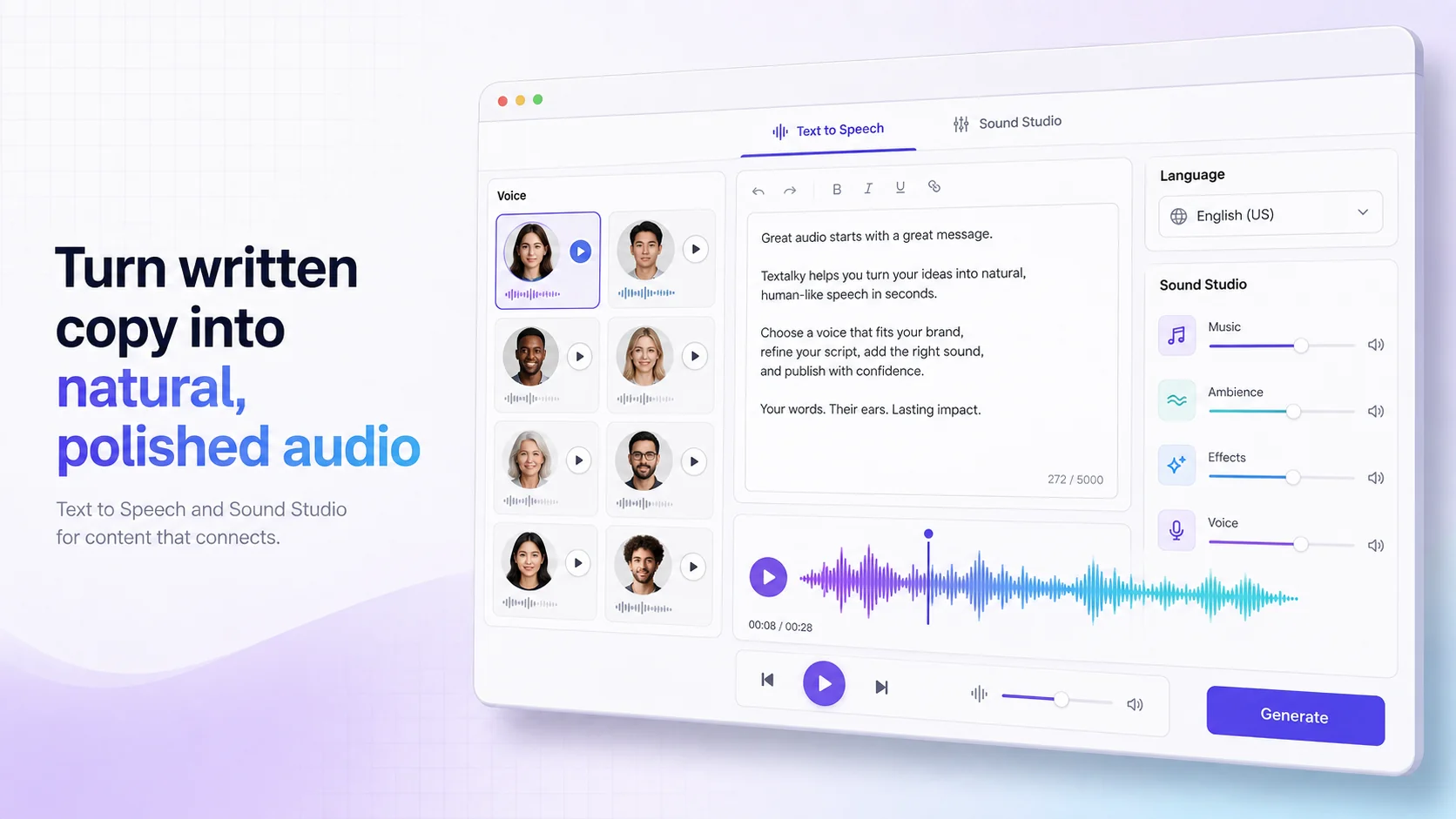
At its core, the technology involves deep learning algorithms trained on a substantial amount of audio data from the target voice. These algorithms analyze the nuances of the voice, learning its distinct patterns and inflections. This capability moves beyond simply reading text aloud; it's about creating a synthetic voice that carries the personality and timbre of a specific person. For those interested in the technical capabilities, Textalky offers advanced AI Voice Cloning as part of its comprehensive suite.
How Does AI Voice Cloning Work?
The process of creating an AI voice clone typically involves several key steps.
First, audio samples of the target voice are collected. The quality and quantity of these samples are crucial for the accuracy of the final clone. Ideally, this involves clean recordings with minimal background noise, spoken in a natural, conversational tone. The more diverse the speech patterns - including different emotions and pronunciations - the more robust the cloned voice will be.
Next, this audio data is fed into an AI model. This model, often a type of neural network, analyzes the vocal characteristics, learning the pitch, intonation, accent, and other unique features of the speaker. This training phase can take varying amounts of time depending on the complexity of the voice and the amount of data provided.
Once trained, the AI model can generate new speech based on text input. You provide the desired script, and the AI synthesizes it using the cloned voice. Many platforms offer a step-by-step guide to help users through this process. The output aims to be indistinguishable from the original speaker's voice, making it suitable for a wide array of applications.
Key Features to Look For in Voice Cloning Software
When selecting AI voice cloning software, several features are essential to ensure you achieve the desired results and maintain ethical standards.
- Voice Quality and Naturalness: This is paramount. The cloned voice should sound human, not robotic. Look for software that produces speech with natural intonation, emotion, and realistic pacing. High voice quality is crucial for believability in marketing, audiobooks, and virtual assistants.
- Language Support: If your content needs to reach a global audience, ensure the software supports multiple languages and accents. This is vital for effective content localization.
- Data Requirements and Training Time: Consider how much audio data is needed to create a clone and how long the training process takes. Some tools may require hours of audio, while others can work with just a few minutes.
- Ease of Use: The interface should be intuitive, allowing users of all technical skill levels to easily upload audio, train models, and generate speech.
- Ethical Safeguards: Reputable software providers implement measures to prevent misuse, such as requiring consent for voice cloning and having clear terms of service regarding ethical usage.
- Integration Capabilities: Can the software integrate with your existing workflows or platforms? This might include API access for developers or direct publishing options for content creators.
- Customization Options: The ability to fine-tune pitch, speed, and emotion can significantly enhance the versatility of the cloned voice.
Applications of AI Voice Cloning
The ability to replicate a voice opens up a vast range of creative and commercial possibilities.
- Personalized Marketing: Imagine marketing campaigns where a brand's spokesperson's voice can deliver customized messages to individual customers. This level of personalization can significantly boost engagement.
- Audiobook Narration: Authors and publishers can use AI voice cloning to create audiobooks efficiently, maintaining a consistent narrator's voice across entire series or ensuring a specific vocal performance without the traditional costs.
- Virtual Assistants and Chatbots: Businesses can develop more engaging and branded virtual assistants for customer service or internal applications. A unique, recognizable voice can build stronger brand identity.
- Content Localization: For global reach, AI voice cloning allows businesses to dub content into multiple languages using a single, consistent voice profile, making content localization faster and more cost-effective.
- Creative Projects: Podcasters, game developers, and filmmakers can use cloned voices for character dialogue, narration, or sound design, adding a unique audio element to their projects.
- Accessibility Tools: Creating custom voices for individuals who have lost their voice due to illness or injury can provide a deeply personal and familiar way to communicate.
Benefits of Using AI Voice Cloning
Compared to traditional methods, AI voice cloning offers several compelling advantages.
- Cost Savings: Hiring professional voice actors can be a significant expense, especially for projects requiring extensive voiceover work. AI voice cloning drastically reduces these costs, often by enabling a one-time investment in a voice model. This leads to substantial cost savings over time.
- Time Efficiency: Generating voiceovers with AI is much faster than scheduling, recording, and editing with human actors. This speed is invaluable for projects with tight deadlines.
- Consistency: AI-generated voices are perfectly consistent. The same pitch, tone, and delivery can be replicated across thousands of hours of content, ensuring a uniform brand voice or character performance.
- Scalability: Need voiceovers for a massive campaign or a long series? AI can scale effortlessly to meet demand without the logistical challenges of managing multiple voice actors.
- Creative Flexibility: Creators have more control over the final output. They can easily tweak pronunciations, adjust pacing, or experiment with different emotional deliveries to perfect their audio content.
Choosing the Right AI Voice Cloning Solution
Selecting the appropriate platform is key to unlocking the benefits of AI voice cloning. Consider these factors:
- Budget: Pricing models vary widely. Some services charge per minute of generated audio, while others offer subscription plans with monthly quotas. It's essential to evaluate your expected usage against the available pricing plans.
- Required Features: Does the platform offer the specific capabilities you need, such as advanced customization, multi-language support, or integration options?
- Voice Quality: Always test samples or request demos to assess the naturalness and accuracy of the cloned voices.
- Provider Reputation and Support: Look for established providers with good customer support and clear ethical guidelines. A platform's commitment to responsible AI use is a strong indicator of its reliability.
For creators looking for an all-in-one solution that includes powerful AI voice cloning alongside writing, image generation, and video tools, Textalky is worth comparing. Especially consider their lifetime access offer, which provides a one-time payment for ongoing access to many features.
Ethical Considerations and Best Practices
The power of AI voice cloning comes with significant ethical responsibilities. It is crucial to use this technology ethically and transparently.
- Consent is Key: Always obtain explicit consent from individuals before cloning their voice. Unauthorized voice cloning can lead to privacy violations and legal issues.
- Transparency: When using a cloned voice, especially in customer-facing applications, it's often best practice to disclose that the voice is AI-generated. This builds trust with your audience.
- Prevent Misuse: Be aware of the potential for voice cloning to be used for malicious purposes, such as creating deepfakes or spreading misinformation. Choose platforms that have safeguards against such misuse.
- Terms of Service: Familiarize yourself with the terms of service of any AI voice cloning provider. These usually outline acceptable use cases and restrictions.
By adhering to these principles, you can harness the incredible potential of AI voice cloning responsibly, enhancing your creative output while respecting individual rights and maintaining public trust.
Frequently asked questions
What is the difference between AI voice cloning and standard text-to-speech?
Standard text-to-speech (TTS) uses pre-recorded libraries of generic voices to read text aloud. These voices have a consistent, often recognizable sound, but lack the unique characteristics of an individual. AI voice cloning, on the other hand, analyzes a specific person's voice and creates a digital replica that mimics their pitch, tone, accent, and cadence, generating speech that sounds like that particular individual.
How much audio data is needed to clone a voice accurately?
The amount of audio data required can vary significantly between different AI voice cloning platforms and the desired accuracy. Some advanced systems can achieve decent results with as little as five minutes of clean audio, while others may require 30 minutes to several hours of high-quality recordings for a near-perfect replication. Generally, more data leads to a more accurate and natural-sounding clone.
Can I use AI voice cloning for commercial purposes?
Yes, AI voice cloning can be used for commercial purposes, but it is essential to follow ethical guidelines and the terms of service of the platform you use. This typically means obtaining explicit consent from the person whose voice is being cloned and ensuring that the generated voice is not used to deceive or harm others. Many platforms offer specific licenses for commercial use, so always check their policies.
For creators seeking to integrate powerful AI tools into their workflow, Textalky offers a comprehensive studio. You can explore its pricing plans to find an option that suits your needs. For those looking for exceptional value, the current lifetime access offer provides a significant opportunity to access advanced AI capabilities for a one-time payment. Consider this as you plan your next creative project.
Ready to try it yourself?
Create a free Textalky account - no credit card required - and put this into practice.
Start creating for free