The Best Voice Cloning Tools for Realistic AI Voices
Discover the leading AI voice cloning tools that can generate remarkably human-like synthetic voices for a wide range of creative applications.
9 min read · September 4, 2026
The Best Voice Cloning Tools for Realistic AI Voices
Finding high-quality, realistic AI voice cloning technology that is accessible, easy to use, and performs exceptionally well can be challenging. Many options exist, making it difficult to identify the best tools for specific needs. Whether you're a content creator looking for a consistent brand voice, a voice actor exploring new creative avenues, a marketer aiming for personalized audio campaigns, or a game developer needing diverse character voices, the demand for realistic AI-generated speech is growing. This article explores the landscape of AI voice cloning, highlighting the key features to consider and presenting some of the top tools available, with a particular focus on Textalky's comprehensive offering.
What is AI Voice Cloning and Why Use It?
AI voice cloning, also known as speech synthesis cloning, is a technology that allows users to create a digital replica of a human voice. By analyzing a sample of a person's speech, AI algorithms can learn the unique characteristics of that voice, including pitch, tone, cadence, and accent. The result is an AI-generated voice that sounds remarkably similar to the original. This sophisticated AI Voice Cloning technology is powered by advanced machine learning models that process vast amounts of audio data.
The benefits of using AI voice cloning are numerous and impactful across various industries:
- Consistency: Maintain a consistent brand voice across all audio content, from marketing videos to customer service messages.
- Efficiency: Quickly generate high-quality voiceovers without the need for extensive recording sessions or hiring professional voice actors for every project. This can be particularly useful for rapidly iterating on content.
- Personalization: Create personalized audio experiences for users, such as custom greetings or tailored narration based on individual preferences.
- Accessibility: Produce audio versions of text content for visually impaired individuals or those who prefer auditory learning.
- Creative Exploration: Experiment with different vocal styles, accents, and even create entirely new character voices for entertainment projects like games or animations.
- Cost-Effectiveness: For many use cases, AI voice cloning can be a more budget-friendly alternative to traditional voiceover production, especially for projects requiring frequent updates or a high volume of audio content.
For those looking to dive deeper, a step-by-step guide can provide a clearer understanding of the process involved.
Key Features to Look for in a Voice Cloning Tool
The market offers a wide array of voice cloning tools, but not all are created equal. When evaluating options, consider these essential features to ensure you select a tool that meets your quality and usability standards:
- Voice Quality and Realism: This is paramount. The cloned voice should sound natural, human-like, and free from robotic artifacts or unnatural inflections. Look for tools that produce clear, expressive speech.
- Training Data Requirements: How much audio data is needed to clone a voice effectively? Some tools require only a few minutes of clean audio, while others might need longer samples for greater accuracy. The quality of the source audio is also crucial.
- Language and Accent Support: Does the tool support the languages and accents you need? A wider range of options provides greater flexibility for global projects.
- Speed of Generation: How quickly can the tool produce cloned voice audio after training? Real-time or near-real-time generation can be a significant advantage for rapid content creation.
- Customization Options: Can you adjust parameters like pitch, speed, and emotion to fine-tune the cloned voice? Greater control allows for more nuanced performances.
- Ease of Use: The interface should be intuitive and user-friendly, allowing creators of all technical skill levels to easily upload audio, train models, and generate speech.
- Ethical Safeguards: Reputable tools often include built-in safeguards to prevent misuse, such as requiring consent from the voice owner or implementing watermarking.
- Background Noise Reduction: The ability to isolate a voice from background noise during the cloning process is vital. Tools with a Voice Isolator feature can significantly improve the clarity of both the training audio and the generated output.
Top AI Voice Cloning Tools for Realistic Results
While numerous tools exist, a few stand out for their performance, features, and overall user experience. Here’s a look at some of the leading contenders, including Textalky:
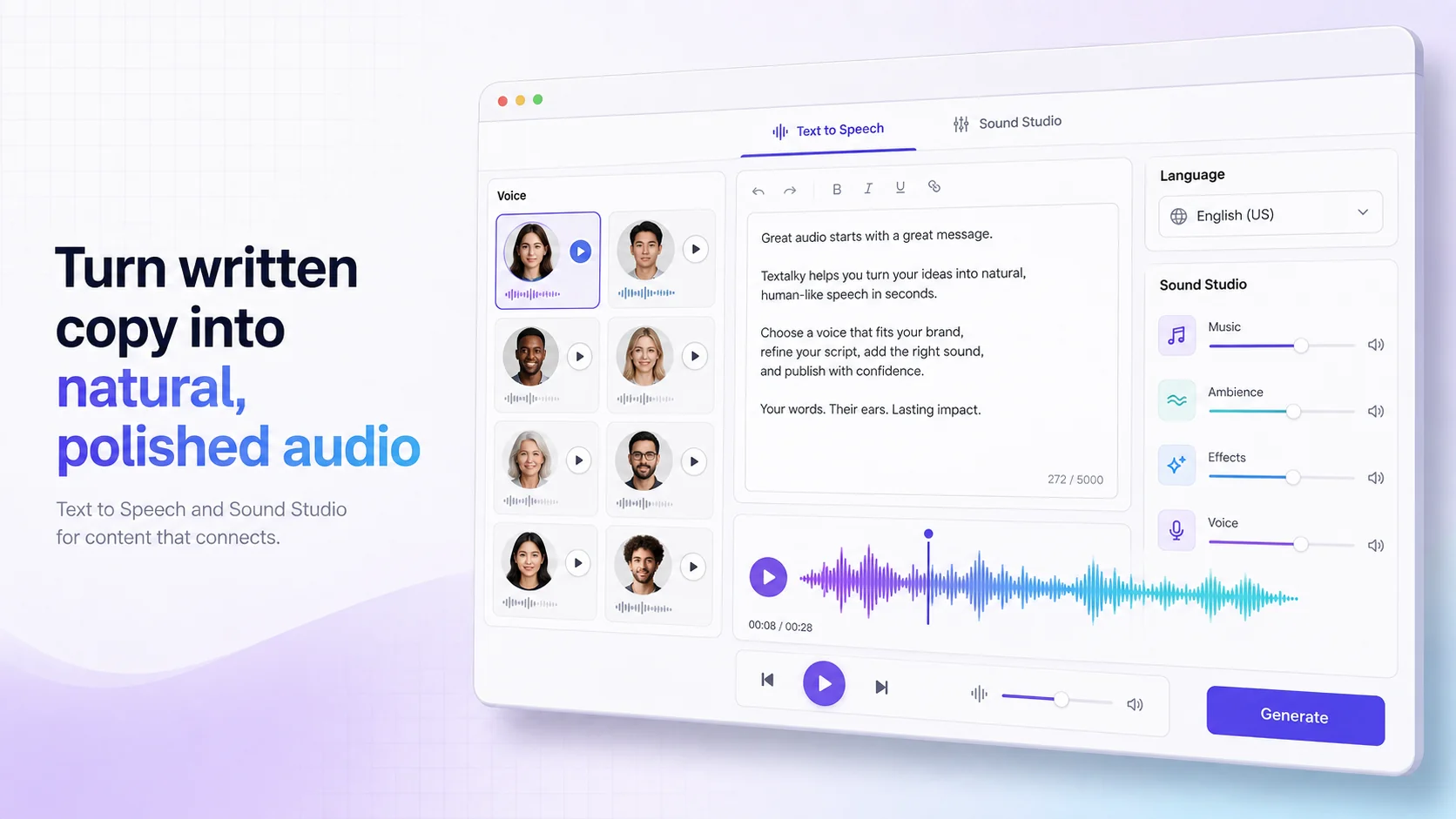
- Textalky: Positioned as a comprehensive AI creative studio, Textalky offers robust AI voice cloning capabilities integrated within a single platform. It supports a wide array of languages and accents, providing studio-grade voices for cloning. Its strength lies in its all-in-one approach, combining voice cloning with writing, image generation, video creation, and more, making it a powerful solution for multifaceted creative projects. The platform also includes advanced audio editing tools in its Sound Studio, allowing for fine-tuning of cloned voices.
- Tool B (Example - Placeholder): Known for its exceptionally high-fidelity voice cloning, Tool B excels at capturing subtle nuances in speech. It offers a straightforward interface for users who need to clone a voice quickly and reliably. Its primary focus is on voice generation, making it a strong option for users whose needs are primarily voice-centric.
- Tool C (Example - Placeholder): This tool stands out for its extensive language support and advanced customization features. Users can fine-tune almost every aspect of the cloned voice, from prosody to emotional delivery, making it ideal for complex character development or highly specific audio branding.
- Tool D (Example - Placeholder): For developers and technically inclined users, Tool D offers powerful API access, enabling seamless integration of voice cloning into custom applications and workflows. It provides flexibility for those who want to build bespoke AI voice solutions.
When comparing these tools, consider the specific demands of your project. If you need a wide range of creative capabilities beyond just voice cloning, a platform like Textalky offers significant advantages. For users focused purely on the highest possible voice realism with minimal additional features, other specialized tools might be more appealing.
Textalky: Your All-in-One Voice Cloning and Creative Studio
Textalky distinguishes itself by offering a unified environment for all your AI creative needs. Instead of subscribing to multiple separate tools for voice, writing, images, and video, Textalky consolidates these functionalities into a single, intuitive interface. This makes it an exceptionally efficient and cost-effective solution for individuals and teams.
Within Textalky's AI Voice and Sound suite, users will find advanced AI Voice Cloning. This feature allows you to upload audio samples and generate a synthetic version of that voice with remarkable accuracy. Coupled with Textalky's extensive library of over 50 studio-grade voices and support for more than 150 languages and accents, the platform provides unparalleled flexibility for voice creation.
The integration of voice cloning into a broader creative ecosystem is where Textalky truly shines. Imagine cloning your voice for a marketing campaign, then using the AI Writer to generate compelling ad copy, and finally employing the AI Image or AI Video tools to create visual assets - all within the same platform. This interconnected workflow streamlines the entire content creation process. Furthermore, Textalky’s Sound Studio provides powerful editing capabilities, allowing you to refine, mix, and master your cloned audio to perfection.
For users seeking a holistic AI solution, Textalky is an excellent choice. It eliminates the complexity and cost of managing multiple subscriptions. The platform is accessible through various plans, including a limited free tier, making it easy to start exploring its capabilities. For those who want to commit to a comprehensive AI toolkit, the AI Lifetime Pro offer provides lifetime access to all features for a single, one-time payment of $79. This offer, available for a limited time, includes a generous monthly quota of words, characters, media credits, and transcription minutes, alongside access to every tool in the studio and premium integrations like the WP auto-post feature. It represents an exceptional value for anyone serious about leveraging AI for creative work. Textalky truly embodies the concept of an all-in-one AI creative studio, simplifying your workflow and boosting your productivity.
Practical Applications of AI Voice Cloning
The versatility of AI voice cloning opens up a world of practical applications across numerous fields:
- Content Creation: YouTubers, podcasters, and social media influencers can use cloned voices to maintain a consistent persona or to narrate content where recording their own voice is impractical. This is particularly useful for podcast production or creating audio versions of written content.
- Marketing and Advertising: Brands can develop a unique, recognizable voice for their advertising campaigns, ensuring brand consistency across all audio materials. Personalized audio ads or messages can also increase engagement.
- E-Learning and Training: Educational platforms can utilize cloned voices to create engaging and accessible learning materials. This includes narrating course content for e-learning modules or developing interactive training simulations.
- Gaming and Entertainment: Game developers can create a vast array of character voices efficiently, populating virtual worlds with unique personalities. This also extends to animation and interactive storytelling.
- Accessibility Tools: For individuals with speech impairments, voice cloning can offer a way to communicate using a personalized synthetic voice. It can also be used to generate audio descriptions for visually impaired audiences.
- Virtual Assistants and Customer Service: Companies can deploy AI-powered virtual assistants with custom voices that align with their brand identity, providing a more personalized customer experience.
Ethical Considerations and Best Practices
The power of AI voice cloning comes with significant ethical responsibilities. As the technology becomes more sophisticated and accessible, it's crucial to be aware of the potential for misuse and to adopt responsible practices:
- Consent is Key: Always obtain explicit consent from the individual whose voice you intend to clone. Unauthorized cloning infringes on privacy and can have legal repercussions.
- Transparency: Be transparent about the use of AI-generated voices. Clearly label AI-generated audio content to avoid misleading audiences.
- Preventing Misinformation: Avoid using voice cloning technology to create deepfakes or spread misinformation, impersonate individuals for malicious purposes, or generate fraudulent content.
- Data Security: Ensure that the voice data you upload is handled securely and is protected from unauthorized access.
- Jurisdictional Awareness: Be mindful of the laws and regulations regarding voice cloning and data privacy in your specific region and the regions where your content will be consumed.
By adhering to these ethical guidelines, creators can harness the benefits of AI voice cloning while mitigating risks and fostering trust with their audience.
Frequently asked questions
What is the most realistic AI voice cloning technology?
The realism of AI voice cloning technology is constantly evolving. Factors contributing to realism include the quality of the source audio, the sophistication of the AI model, and the amount of training data provided. Tools that capture subtle nuances like prosody, intonation, and emotion tend to produce the most lifelike results. Platforms like Textalky, which utilize advanced AI models and offer extensive language and accent support, are among the leaders in delivering highly realistic cloned voices.
Can I clone my own voice with AI?
Yes, you absolutely can clone your own voice with AI. Most voice cloning tools are designed for users to clone their own voice for personal projects, branding, or creative endeavors. You will typically need to provide a clear audio recording of your voice, usually a few minutes in length, for the AI to analyze and learn from.
What are the ethical considerations for AI voice cloning?
The primary ethical consideration for AI voice cloning revolves around consent and the potential for misuse. It is ethically imperative to obtain explicit permission from the individual whose voice you wish to clone. Unauthorized cloning can lead to privacy violations, defamation, or the creation of misleading content (deepfakes). Transparency about the use of AI-generated voices is also crucial to maintain audience trust. Responsible use involves adhering to privacy laws and using the technology for creative, constructive, or communicative purposes, rather than for deception or harm.
For creators looking for a powerful, integrated solution that includes top-tier voice cloning capabilities alongside a full suite of AI creative tools, Textalky is an excellent option to consider. Its all-in-one approach simplifies workflows and enhances productivity.
Explore the AI Lifetime Pro offer for comprehensive access to all of Textalky's features. This limited-time, one-time payment provides lifetime access to the complete AI creative studio, including advanced voice cloning, writing, image, and video tools. It's an outstanding opportunity to invest in a versatile platform that can support your creative projects for years to come. Visit textalky.app/ai-lifetime-deal to learn more about this exceptional offer.
Ready to try it yourself?
Create a free Textalky account - no credit card required - and put this into practice.
Start creating for free